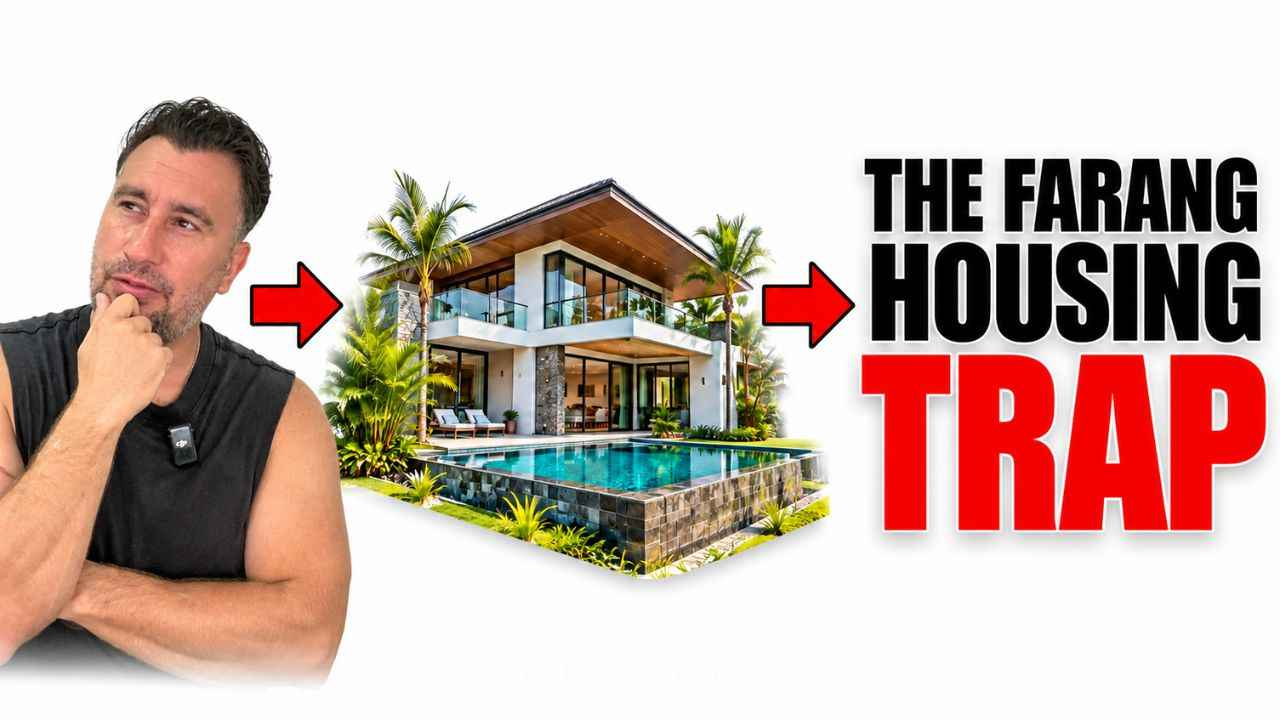
Buying a House in Thailand
What Foreigners Aren’t being Told
If you're thinking about buying a house in Thailand, you've probably already seen the dream being sold. Beautiful villas, private swimming pools, tropical surroundings, gated developments, and prices that may still look inexpensive compared with cities in the United States, Europe, Australia, or other Western countries.
But there's a question I started asking after living here and looking seriously at Thai real estate: Why did the housing developments marketed toward foreigners seem so separated from the ones Thai people were actually buying in? In some developments aimed at foreigners, I would see foreigners everywhere—but almost no Thai buyers. And that didn't make sense to me because Thailand certainly has middle-class, upper-class, and wealthy Thai people who can afford expensive houses.
Once I started looking deeper, that simple question opened up a much bigger conversation about Thailand's property market for foreigners—pricing, value, construction, management fees, how purchases are financed, land ownership, leaseholds, company structures, and some of the risks that can become very expensive if you don't understand the system before entering it.
That's what I call the Farang Housing Trap.
- The Farang Housing Trap
- Thai House Prices vs. Farang House Prices
- What Is the House Actually Worth?
- Don't Confuse Appearance With Quality
- The Management Fee Nobody Thinks About
- Foreigners Buying Houses Have Another Problem: The Land
- Leasehold and Thai Company Structures
- Thailand Land Scams Can Change Everything
- Don't Move to Thailand and Immediately Start Buying Everything
- Buying a House in Thailand Isn't the Problem
The Farang Housing Trap
One of the first things that caught my attention when buying a house in Thailand was how separated the two markets could appear.
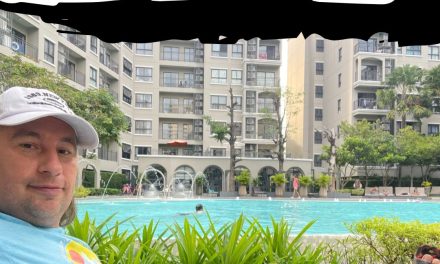
There are housing developments primarily populated and marketed toward foreigners, while Thai buyers may be purchasing homes elsewhere. That's important because once you're operating inside a market predominantly serving foreigners, the prices you're seeing aren't necessarily giving you the complete picture of what housing costs throughout Thailand.
This doesn't mean every development targeting foreigners is bad or that every foreigner is being ripped off. That's not the argument.
The point is that before spending millions of baht, you should know which market you're comparing the property against.
Because that's where the pricing gets interesting.
Thai House Prices vs. Farang House Prices
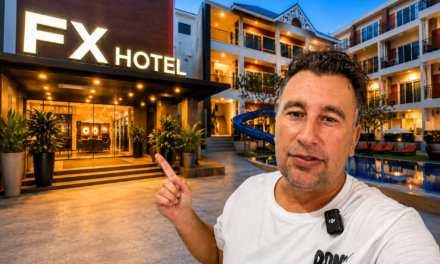
While looking at properties, I saw Thai developments where houses could sell in roughly the 4–6 million baht range, including substantial two-story homes on decent plots of land. Then I would look at developments targeting foreigners and see properties reaching roughly 10–15 million baht.
That's a massive difference.
Of course, you can't simply say every 5-million-baht house is equivalent to every 15-million-baht house. Location, land, construction, amenities, development quality, and countless other factors affect property values.
But those differences were large enough to make me start asking questions.
What exactly am I paying for?
Is the construction substantially better?
Is the land significantly more valuable?
Is the location dramatically better?
Or is part of the price simply based on what the developer believes a foreign buyer is willing to pay?
Those are questions worth asking before deciding that a house is a bargain simply because it seems cheap compared with your home country.

Work with Chad
Tired of struggling with finances or feeling stuck in life? Chad can help you break free, grow your wealth, improve your health, and create lasting prosperity. Click now to change your story!
What Is the House Actually Worth?
This is one of the biggest problems I see with foreigners entering the Thailand housing market; and buying a house in Thailand.
Many people naturally compare a Thai property's price with the price of property back home.
If someone comes from California, London, Sydney, Toronto, or another expensive market, a house costing $300,000 may immediately seem inexpensive.
But that's the wrong comparison.
The important question isn't:
“What would this house cost in my country?”
It's:
“What is this property actually worth in this market?”
In the video, I talk about another difference I noticed: Thai buyers frequently use bank financing, while foreign buyers can enter these transactions with substantial amounts of cash. That can remove one of the traditional checkpoints buyers are accustomed to having when purchasing property.
You need some way of determining whether the asking price makes sense beyond simply trusting the person selling it.
Don't Confuse Appearance With Quality
A house can photograph beautifully.
Modern architecture. Giant windows. Gorgeous swimming pool. Beautiful kitchen. Tropical landscaping.
None of that necessarily tells you what's behind the walls.
One of my concerns after looking at foreigner-oriented developments was whether the construction quality actually justified the asking price. I've also heard stories through people I've known in Thailand's real-estate industry about properties requiring substantial repairs only a few years after completion.
That's why the finished product can't be the only thing you're evaluating.
If you're considering buying a house in Thailand, you need to understand what was built, how it was built, who built it, the reputation of the development, and what has happened to properties in that development several years after completion.
The beautiful swimming pool is easy to see.
The corners that may have been cut during construction aren't.
no fluff. no spam. just one weekly mindset drop to help you break patterns, shift identity, and take power back
No Spam.
Unsubscribe anytime.
But let's be real - you won't want to.
The Management Fee Nobody Thinks About
The purchase price isn't necessarily the end of the expense.
If you're buying a house in Thailand inside a managed housing development, you may also have recurring management fees.
When I was looking at a house in Hua Hin, one development I considered had a management fee of approximately 6,000 baht per month. That immediately caught my attention because it was dramatically different from some of the fees I was familiar with in Thai developments.
But the amount isn't the only question.
What are you actually receiving for it?
How is the money managed?
How quickly are common facilities repaired?
What happens when something breaks?
Who controls the management fund?
These aren't exciting questions when you're standing inside your potential dream house.
They become considerably more interesting after you've bought it.
Foreigners buying a house in Thailand Have Another Problem:
The Land
This is where buying a house in Thailand as a foreigner becomes fundamentally different from buying a house in many Western countries.
A foreigner generally cannot directly own land in Thailand in the same way a Thai citizen can. That means the structure surrounding the land underneath your house becomes incredibly important.
In the video, I discuss several arrangements foreigners encounter, including having land held in a Thai spouse or partner's name, leasehold arrangements, and Thai-company structures.
And this is where I would stop treating a Thailand property purchase like an ordinary transaction.
You're no longer simply asking:
“Do I like this house?”
You're asking:
“What exactly do I legally control when this transaction is finished?”
Those are two completely different questions.
Leasehold and Thai Company Structures
One structure foreigners may encounter is a leasehold, where the land is leased rather than directly owned by the foreign buyer. Another structure that has historically been used involves a Thai company holding land.
This is precisely where professional legal advice becomes important.
Company structures involving nominee shareholders and arrangements created merely to circumvent Thailand's foreign land-ownership restrictions can create serious legal problems. The video also discusses the increased scrutiny and enforcement surrounding company structures used by foreigners.
I wouldn't rely on another expat telling you:
“Don't worry. Everybody does it.”
And I definitely wouldn't structure a multimillion-baht property transaction based on something you heard in a Facebook group, bar, YouTube comment section, or from someone who bought a house ten years ago.
If you're putting serious money into Thailand property, get current advice from a qualified independent Thai attorney who represents your interests.

Power wealth classics
Struggling to achieve financial freedom or live the life you deserve? Power Wealth Classics is your ultimate guide to timeless principles of success and abundance. Available now on Amazon, this book combines proven strategies and insights from history's greatest minds to help you break free from limitations, build wealth, and create lasting prosperity. Don’t wait—transform your life today!
Thailand Land Scams Can Change Everything
This is where the subject gets even more serious.
A beautiful house is only part of a property transaction.
There is also the land itself, its documentation, ownership history, title, existing claims, and whether the person attempting to sell or control that property actually has the legal ability to do what they're telling you they can do.
The video goes into examples and concerns surrounding disputed land, generational claims, competing ownership claims, fraudulent documents, and situations where someone can discover after paying that the property situation isn't what they believed it was.
That's why due diligence isn't some annoying administrative step you rush through because you found your dream villa.
It may be the most important part of the purchase.
Don't Move to Thailand and Immediately Start Buying Everything
This might be one of the most important pieces of advice I can give someone considering retiring in Thailand.
You don't have to buy immediately.
In fact, I think there is enormous value in actually living in Thailand for a couple of years first.
Learn how things work. Learn the areas. Learn what property actually costs. Meet people. Watch what happens to other foreigners. Understand which city or province you actually enjoy living in after the honeymoon period wears off.
I have heard the same general story repeatedly over the years: someone retires, sells their property and possessions back home, arrives in Thailand with a substantial nest egg, and immediately starts buying a house, condo, vehicles, and everything else needed to establish a new life.
There is no prize for spending your money quickly.
Thailand isn't going anywhere.
Renting for a while can buy you something extremely valuable:
time and knowledge.
Buying a House in Thailand Isn't the Problem
I don't want this article to be interpreted as “never buy a house in Thailand.”
That's not my position.
I've lived in Thailand for years. I love Thailand. It can be an incredible place to live, retire, and build a life.
My argument is much simpler:
Don't enter a market you don't understand with millions of baht simply because everything looks inexpensive compared with your home country.
Learn the Thai housing market.
Compare properties beyond developments specifically targeting foreigners.
Understand what you're paying for.
Investigate the construction.
Understand every recurring fee.
Know exactly what you're buying and what you're not buying.
And when land, contracts, companies, leases, or significant amounts of money are involved, get independent professional legal help before signing or paying for anything. That's also the central practical recommendation I make toward the end of the video.
Because buying a house in Thailand can absolutely be part of building an amazing life here.
But being a foreigner with money doesn't mean you have to become an easy customer.
Sometimes the most valuable thing you can do before buying your dream house is understand the market that's trying to sell it to you.
🔗 Related Resources

Chad Napier
I'm here to help you unlock Wealth, Health & Prosperity by mastering your mindset and living life on YOUR terms. If you're ready to break free from the ordinary—you’ve found your Tribe.